Most marriages don’t break down because of one big moment.
They erode slowly—through missed conversations, unspoken needs, and small resentments that never quite get addressed.
One simple weekly habit can help interrupt that drift: a marriage check-in.
Not a problem-solving meeting.
Not a rehashing of old arguments.
A short, intentional pause to stay connected, aligned, and accountable.
Why a Weekly Check-In Matters
When couples don’t regularly check in, misunderstandings grow. One partner starts carrying more emotional or practical weight. The other may pull back, get defensive, or avoid difficult conversations altogether. Over time, frustration replaces curiosity, and distance replaces teamwork.
A weekly check-in creates a predictable space to talk about what’s working, what’s hard, and what each person needs—before things reach a breaking point.
It’s less about fixing everything and more about staying in relationship.
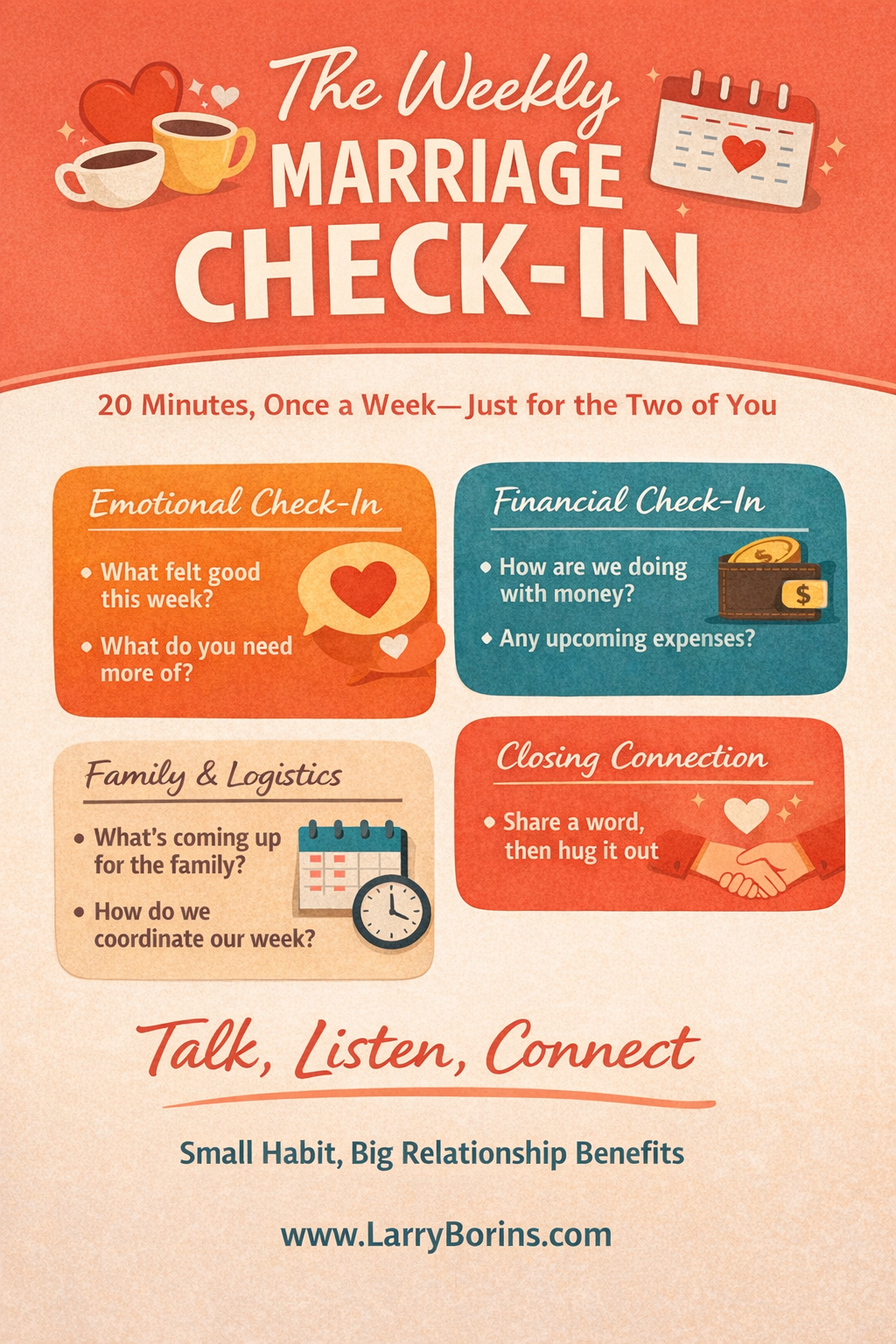
The 20-Minute Marriage Check-In
Set aside 20 minutes once a week. Choose a consistent time. Put phones away. Sit facing each other.
The structure matters—it keeps the conversation focused and prevents it from turning into an argument.
1. Emotional Check-In (8 minutes)
Each partner takes a turn answering:
-
What felt good between us this week?
-
What was challenging in our relationship this week?
-
Where did I miss the mark or show up less well than I wanted to?
-
What do I need more of from you right now?
Speak from your own experience. Avoid blaming, diagnosing, or keeping score. The goal is honesty and understanding, not winning.
2. Financial Check-In (5 minutes)
Money often carries stress, fear, and unspoken assumptions.
Briefly discuss:
-
How are we doing financially this week?
-
Any upcoming expenses or concerns?
-
Is there anything around money that feels tense or unclear?
Short, regular conversations about money help prevent secrecy and resentment from building.
3. Family & Logistics Check-In (5 minutes)
This is where many couples quietly disconnect.
Talk through:
-
Kids’ schedules and needs
-
Work commitments
-
Household responsibilities
-
Time you want to protect for yourselves as a couple or family
Clear communication reduces misunderstandings and helps both partners feel supported rather than overburdened.
4. Closing Ritual (2 minutes)
End on purpose.
-
Share one word or feeling you’re leaving with
-
Offer a small gesture of connection—a hug, holding hands, eye contact
How you end the conversation matters just as much as what you discuss.
What Changes Over Time
At first, this may feel awkward or forced. That’s normal. Most people were never taught how to talk openly and respectfully about relationship needs.
Over time, couples often notice:
-
Fewer blowups because issues are addressed early
-
More trust through consistent honesty
-
Less resentment and less emotional distance
-
A stronger sense of being on the same team
This isn’t about perfection. It’s about practice.
Growing Together, Not Changing Each Other
Healthy relationships aren’t built by trying to fix or manage your partner. They grow when both people take responsibility for their impact, name their needs clearly, and stay engaged even when things feel uncomfortable.
A weekly marriage check-in is one small, powerful way to do exactly that.